Why Houston Builds Townhouses
September 29, 2026
September 29, 2026
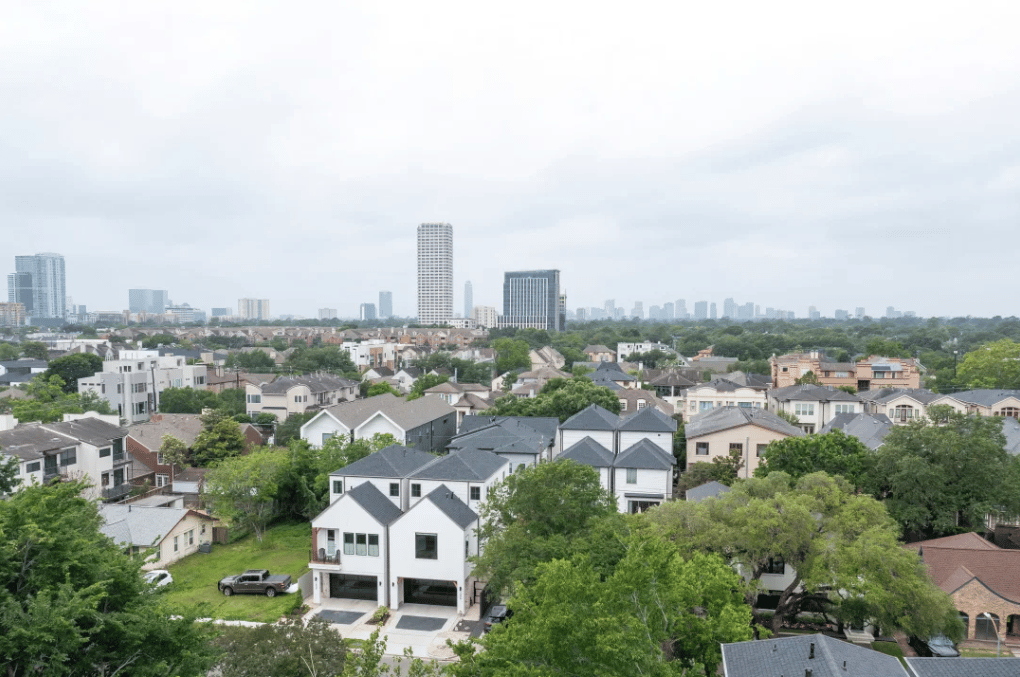
Drive through almost any Houston neighborhood and you’ll see a familiar mix of traditional single-family homes, older bungalows, newer construction, and increasingly, rows of tall townhouses. Over the past couple of decades, townhouses have become one of the most recognizable housing styles throughout the city, particularly in Houston’s urban core.
While some residents have mixed feelings about the rapid increase in townhouse developments, these homes offer several practical advantages. They allow more homes to be built on less land, creating greater housing density in areas that have historically been dominated by larger residential lots. Townhouses also tend to offer buyers the opportunity to live closer to Houston’s central employment and entertainment districts without the higher price tag that can come with a traditional single-family home on a larger lot.
Research from Rice University’s Kinder Institute found that although townhouses represent a relatively small percentage of Houston’s overall housing inventory, they account for a much larger share of homes constructed in recent decades. Since 2005, townhouses have represented nearly 10 percent of new housing built citywide. Within the 610 Loop, that percentage climbs significantly, with townhouses accounting for more than a quarter of newly constructed housing during the same period.
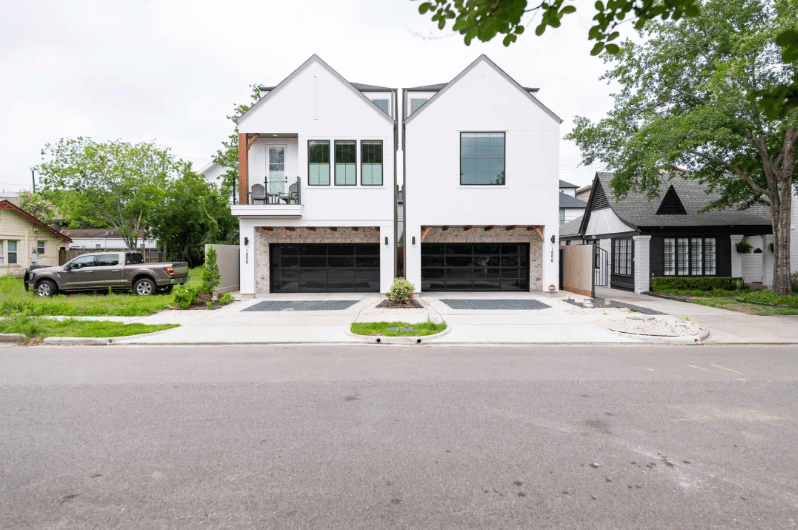
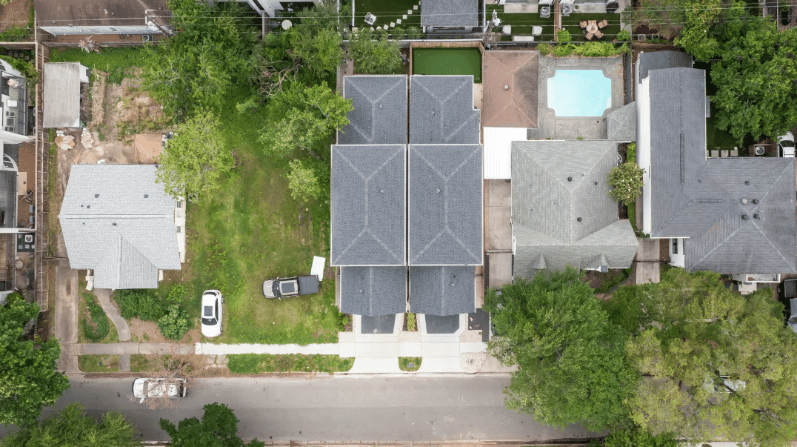
One of the most distinctive characteristics of Houston townhouses is that many are completely detached from neighboring homes.
Unlike traditional townhomes in cities such as New York, Chicago, or Philadelphia, Houston’s versions often do not share walls. Instead, buyers typically own both the home and the individual parcel of land underneath it. This type of fee-simple ownership gives homeowners many of the characteristics of traditional single-family ownership while allowing builders to create significantly more homes on the same amount of land.
For buyers, the result can be appealing: a freestanding home, private ownership of the lot, and access to desirable urban neighborhoods at a price that may be lower than larger single-family properties nearby.
Houston’s development environment has played a major role in shaping this unique housing style.
Houston is well known for being the largest U.S. city without traditional zoning. However, that does not mean development is completely unrestricted. The city regulates development through subdivision requirements, building codes, deed restrictions in certain communities, minimum lot standards, setbacks, parking requirements, and other regulations.
The major turning point for townhouse development came in 1998, when Houston significantly changed its minimum lot-size regulations.
Before those changes, building smaller homes on individual lots was much more difficult. Minimum lot sizes and setback requirements generally required developers to use substantially larger parcels for each home. That limited the number of homes that could be constructed on a property and often made townhouse projects too expensive for many buyers.
The 1998 reforms changed that.
Within the 610 Loop, minimum lot sizes for certain residential developments were reduced from approximately 5,000 square feet to as little as 1,400 square feet. In 2005, similar development rules were expanded into additional areas outside the Loop.
That change made it possible for developers to divide larger residential properties into several smaller lots while still constructing individual detached homes.
Instead of one home occupying a 5,000- or 6,000-square-foot lot, developers could potentially build several homes on the same amount of land.
Because the regulations did not require these homes to share walls, Houston developers increasingly began constructing what are commonly referred to as detached townhouses.
Once smaller lots became easier to develop, townhouse construction expanded rapidly.
Neighborhoods close to Downtown Houston experienced particularly significant growth. Areas such as Montrose, Midtown, Rice Military, Washington Avenue, the Heights area, and portions of EaDo became popular locations for townhouse projects.
Many of these developments feature two- or three-story homes positioned closely together, often along shared driveways or within small gated communities. Some have small private yards, rooftop terraces, balconies, or private garages.
The design allows developers to provide more housing in desirable locations while still offering buyers something Houston homeowners traditionally value: their own home on their own piece of land.
That combination has helped distinguish Houston’s housing market from many other major U.S. cities.
In cities with stricter residential zoning, converting a traditional single-family lot into several individually owned homes can involve zoning changes, public hearings, variances, or other approval processes. Houston’s development regulations generally provide builders with more flexibility when a proposed project meets the city’s subdivision and construction requirements.
This predictability has helped make small-lot housing a common part of Houston’s residential landscape.
The arrival of new townhouse developments is sometimes viewed as a sign that a neighborhood is changing rapidly.
However, researchers have suggested that townhouse construction may often follow neighborhood demand rather than create it.
Developers naturally look for areas where buyers already want to live. Neighborhoods near major employment centers, restaurants, entertainment districts, parks, and transportation corridors often attract redevelopment because the underlying land has become increasingly valuable.
As property values rise, replacing one older home with several new homes can become financially attractive for builders.
In that sense, townhouse construction may sometimes be more of a reflection of an already-changing neighborhood than the original cause of those changes.
Houston’s detached townhouse may ultimately represent a compromise between suburban-style homeownership and urban density.
Buyers can live on a smaller lot while still owning a detached home. Developers can build more homes on expensive urban land. And neighborhoods can gradually increase their housing supply without relying entirely on large apartment or condominium developments.
The result is a type of housing that has become distinctly Houston.
While Houston's overall development pattern still shares many similarities with other Sunbelt cities, detached townhouses remain one area where the city has developed a noticeably different approach.
For buyers who want the convenience of an urban location without giving up the independence of a freestanding home, Houston's detached townhouse offers an increasingly common alternative—and one that has permanently changed the appearance of many neighborhoods across the city.
Stay up to date on the latest real estate trends.
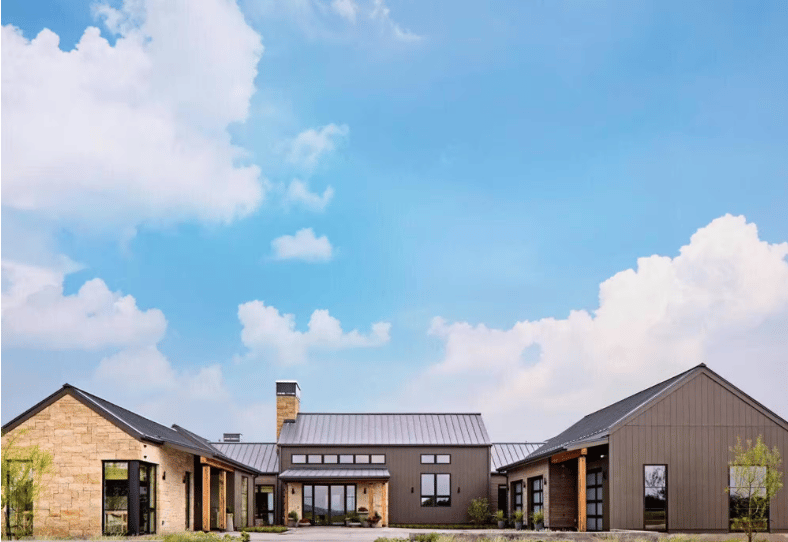
Southern Living brings fresh Texas design inspiration to Fredericksburg.

A 3,500-home active adult community is bringing resort-style living to Galveston Bay.
How this Cypress master-planned community is redefining modern suburban living.
The story behind the city’s signature detached townhome boom.

Today’s dressing rooms are blending storage, style, and comfort into one unforgettable space.
Historic land, modern homes, and wide-open Texas living.
Why this stylish, hardworking space is becoming a must-have feature in modern Houston homes.
For many Texas markets, that opportunity may arrive as summer winds down.
Combining nature and thoughtful design to create more connected communities.
As part of CB&A, Real Estate Agent, the Hurley Homes Realty Group consists of dedicated full-time agents assisting families with buying, selling, renting, and investing in Houston properties. Whether you're considering a home purchase or sale in Houston, I'm here to talk! Connect with me today for a personalized consultation.